Festive Activities for Your Christmas Homeschool Unit Study

If you’ve ever tried to follow your regular homeschool schedule in December, you know it’s like trying to read a book during a snowball fight. The holidays bring excitement, glitter, and about 200 distractions, making it difficult for kids to stay focused on things like math and geography.
A Christmas homeschool unit study builds on that natural excitement. It’s a way to learn together through hands-on projects, stories, and reflections that celebrate curiosity, generosity, and that contagious Christmas spirit. Here’s a list of merry, meaningful ideas to weave into your Christmas homeschool unit study so you can keep your kiddos in learning mode during the holidays.
Hands-on fun during the holiday season
Kids don’t always sit still, but give them something to make or build, and suddenly they’re ready to focus. These hands-on ideas bring a bit of calm, creativity, and fine-motor skills to your Christmas unit study.
Salt dough ornaments
Salt dough is one of the easiest holiday crafts to set up. It’s just flour, salt, and water mixed into a dough that you can roll and cut like cookies. Kids can use cookie cutters, cup rims, or their own shaped creations to make ornaments or little sculptures.
To add a sensory element, mix in cinnamon or press in natural textures like pine needles, leaves, or bark before baking. This project builds fine-motor skills, introduces basic chemistry (mixing, drying, heating), and produces decorations you can keep year after year.
STEAM snowflakes
DIY snowflakes turn simple materials into a mini geometry lesson.
Give kids cotton swabs, toothpicks, or straws trimmed to different lengths and start by looking at a photo of a real snowflake. Point out the six-point patterns to give kids something concrete to copy.
Younger kids can build repeating patterns, while older learners can measure angles, match lengths, or try more complex 3D snowflake structures.
Gingerbread house
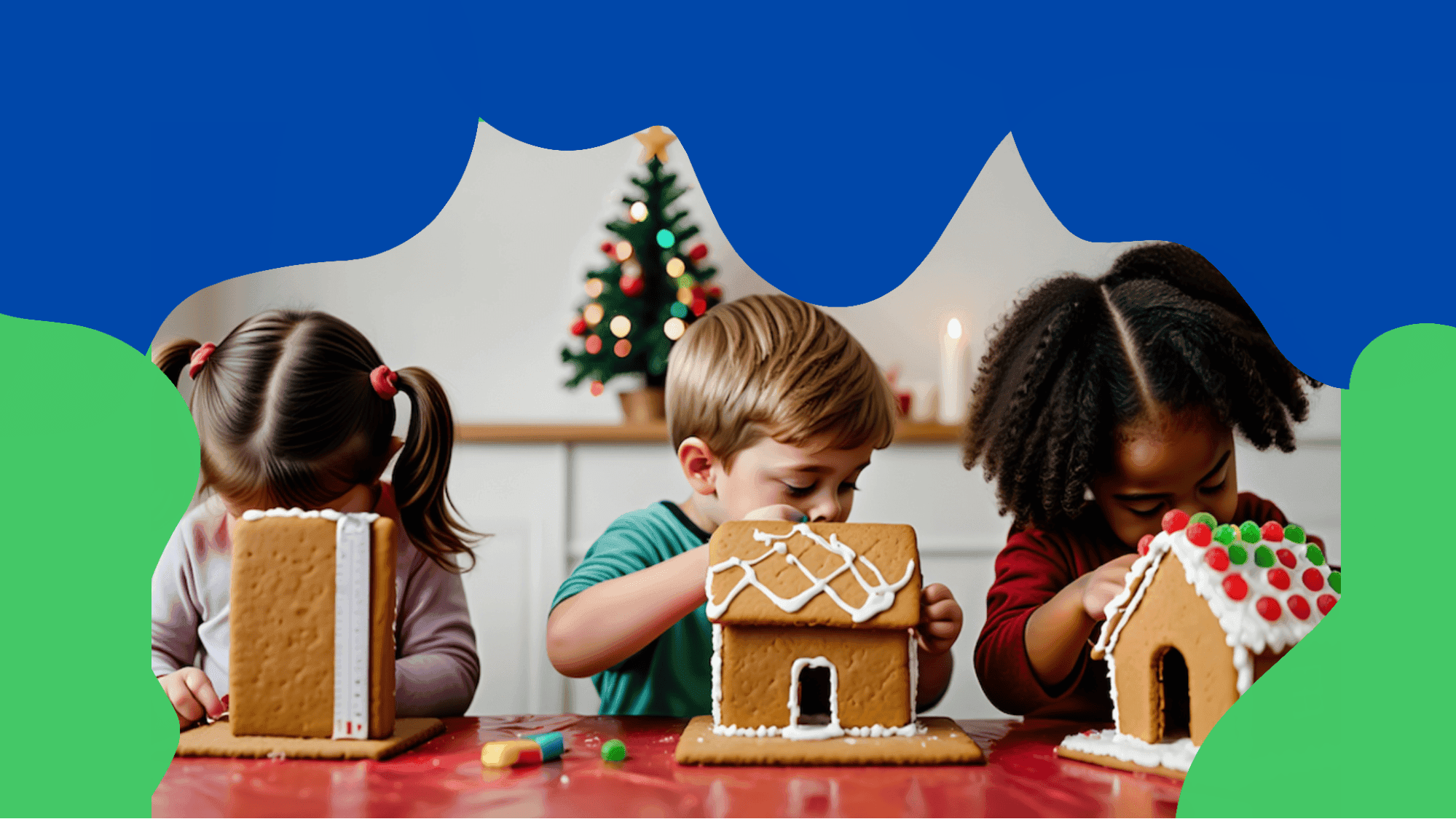
It isn’t Christmas without a gingerbread house, which is basically edible engineering. Assemble walls, test icing as your building material, and compare which “cement” creates the strongest hold. Kids think they’re decorating. You know they’re working through geometry and design.
Christmas baking
From crumbly mince pies to gingerbread cookies, turn your kitchen into a cozy little learning lab by testing which ingredients help your bakes rise higher, spread wider, or brown faster.
Add some cultural insight by exploring holiday baking traditions from around the world. Try Swedish pepparkakor, Italian pizzelles, or South African soetkoekies, then mark each recipe on a map. It’s hands-on geography, cultural studies, and delicious STEM all in one warm, cinnamon-scented Christmas lesson.
DIY Christmas wrapping paper
Forget store-bought rolls of wrapping paper. Making your own is eco-friendly, creative, and way more fun. Spread out a big sheet of kraft paper (or the back of old packing paper) and let kids turn it into a festive canvas.
Try stamping with nature finds like pine needles or leaves, rolling marbles through paint, or using potatoes and cookie cutters as homemade stamps. It’s memorable and perfect for wrapping gifts with a personal touch.
Upcycled decorations
Give old packaging and jars a second life by turning them into festive décor. Cereal boxes become sturdy ornaments, gift tags, or mini gingerbread houses, while empty jars make charming “snow globes” with a little glitter and imagination.
It’s a simple way to spark creativity while talking about sustainability, recycling, and how small choices can make the holidays a little kinder to the planet.
Movement and games
When the holiday wiggles hit, it’s time to get moving. These festive games help kids burn energy, practice problem-solving, and work as a team
Santa’s workshop relay
Have kids “deliver presents” by carrying blocks or small boxes across the room. Add fun twists like balancing gifts on a spoon, hopping like reindeer, or racing the clock to see who can deliver them fastest.
Christmas freeze dance
Put on a playlist of Christmas songs and let the dancing begin. When the music stops, kids freeze like snowmen, elves, or reindeer. Call out silly actions each round like “Be a twinkling star!” or “Pretend to wrap the biggest present ever!”
Elf scavenger hunt
Hide small items or clues around the house and send your little elves searching. Mix in riddles, math prompts (“Find five red things shaped like circles”), or simple spelling challenges to keep the learning going.
Reindeer training course
Create a mini obstacle course using pillows, tunnels, painter’s tape, or balance lines. Kids can crawl, leap, tiptoe, and “fly” their way through as official members of Santa’s reindeer team.
Storytelling and literacy
Christmas is the perfect time to curl up with good picture books and spark big imaginations. These activities blend reading, writing, and pretend play into learning that feels like magic.
Festive read-alouds
Settle in with heartwarming Christmas books like:
Pause to talk about characters, feelings, or favorite parts of the story. Simple conversations build comprehension more than most worksheets ever could.
Creative prompts
The more kids imagine and express, the stronger their brains grow. Give kids a reason to let their imaginations run wild with writing prompts like:
“If I woke up in the North Pole…”
“Describe the view from a snowflake’s point of view.”
“Invent a new holiday and explain its traditions.”
“If I could fly Santa’s sleigh…”
“How would I celebrate Christmas on the moon?”
These prompts encourage kids to stretch their imagination, an essential skill linked to flexible thinking and early literacy growth.
Story sequencing
Cut out magazine pictures to build a Christmas story timeline, or use scenes from favorite holiday movies like The Polar Express or Klaus. Younger kiddos can arrange picture cards while older kids narrate or write out the sequence.
Christmas news desk
Invite your kids to step into a make-believe newsroom and become “holiday reporters.” They can write and present a news update from the North Pole, report on the weather conditions for sleigh travel, or interview a family member about their favorite tradition.
Christmas comic strip
Use storyboards or printable templates for kids to create their own illustrated Christmas adventures with speech bubbles, panels, and characters. Comics are a great way to support reluctant writers because pictures help them organize their thoughts before adding words.
Social-emotional learning (SEL)
The holidays naturally invite kindness, reflection, and connection, all foundational parts of social-emotional learning. These SEL activities help kids slow down and notice how they feel during a season that’s often busy and overstimulating.
Acts of kindness Advent
Do one small good deed each day: help, share, say thank you. Keep it simple with prompts like:
- Smile at three people today.
- Donate a toy you no longer use.
- Hold the door for someone.
Little acts create big habits.
Gratitude chain
Write one thankful thought on a strip of paper each day and link the strips together. By Christmas, you’ll have a colorful chain full of memories to hang up at home.
Cocoa and conversations
Settle in with a warm drink and chat about a favorite holiday memory or something new they learned this year. These gentle conversations build emotional awareness and connection.
Mindful moments
Play calm music, winter wind, or soft “snowfall” sounds. Guide a short breathing exercise with Christmas-themed prompts like “breathe in like snowflakes, out like warm cocoa steam.” It’s a grounding way to help kids reset during the excitement of December.
Discovery and nature learning
December brings lots of little changes in nature and daily life. These quick activities encourage kids to notice patterns, ask questions, and explore real-world science.
Pinecone study
Pinecones make great little science tools. Collect a few, feel the textures, and notice how each one is built differently. Then place them in warm, cold, dry, and damp spots to see how they react. Their slow opening and closing offer a simple glimpse into how plants sense and respond to their surroundings.
Christmas tree life cycle
Explore what makes evergreens stand out from other trees, from their needle-shaped leaves to the way they stay green year-round. Kids can label parts of a conifer, count rings on a log slice, or dig into how Christmas tree farms grow and replant sustainably.
Weather watch
Track what the weather is doing each day and look for weather patterns as Christmas approaches. Kids can record temperatures, note changes in the sky, or compare sunny with cloudy days. Turn the data into a simple chart or graph for a great introduction to real-world science and observation.
Melting ice experiment
Run a “melting race” using ice cubes and materials like salt, sugar, warm water, or sunlight. Kids add each one to a different cube, make predictions, and watch which melts fastest. It’s a simple but effective way to explore states of matter and cause-and-effect.
Snowstorm in a jar
Add oil, water, and glitter to a jar to create a swirling mini “snowstorm.” As the glitter drifts through, kids can observe density, buoyancy, and how different liquids interact, all with a little holiday sparkle.
Reindeer migration and winter animals
Explore how animals respond to changes in their biome, from reindeer trekking across tundra pathways to birds changing their feeding patterns. Kids can sketch habitats, compare survival strategies, or make quick fact cards. These small investigations help them understand ecosystems and adaptation in nature, all key ideas in an early biology curriculum.
Fun-filled learning that lasts beyond the holidays
A Christmas unit study brings out the best kind of learning. Kids lean in a little more, ask different questions, and connect schoolwork with the world in front of them.
At bina, that’s not a seasonal feeling. It’s the everyday norm. With small groups, caring teachers, and a curriculum built around exploration, kids experience this same sense of wonder long after the holidays end.
Accredited, full-time school for grades K-12
Bring the best of the classroom to your home
See if we're a fit

More to read
Fun Thanksgiving Homeschool Unit Study Activities for Kids
Inspire creativity and curiosity this fall. These Thanksgiving homeschool unit study ideas mix science, art, literacy, and gratitude into one memorable week.

Hands-on ideas for your homeschool Easter unit study
Bring spring to life with a homeschool Easter unit study packed with fun experiments, art, and meaningful SEL lessons.

Every parent's list of social-emotional learning resources
Turn playtime into learning time with social-emotional learning resources that teach kids empathy, resilience, and self-control through fun.