6 project-based learning math ideas for elementary-aged kids
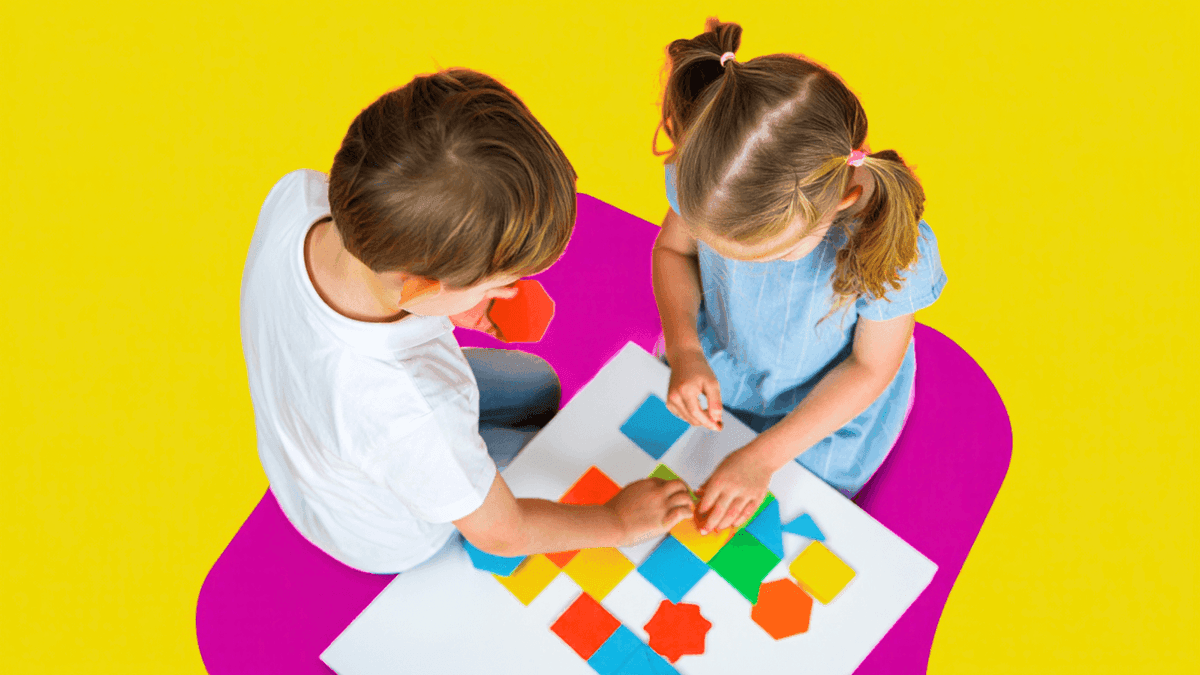

Math can feel abstract when it’s all rules and worksheets, which don’t always help kids connect what they’re learning to the world around them. And when math feels disconnected, children can lose confidence or start to think they’re “not a math person,” even when there might be a budding code-breaker or pattern-maker inside.
That’s where project-based learning shifts the experience. When learners build, design, plan, measure, test, and create, math becomes something they use and understand. It supports problem-solving, reasoning, and critical thinking, and helps kids see the purpose behind the numbers.
Let’s explore simple, real-world project ideas to do at home that help elementary-age learners experience math in meaningful ways.
What is project-based learning in math?
Project-based learning (PBL) is a hands-on way for kids to use math to solve a real problem and work toward a clear outcome.
Instead of isolated, abstract exercises, kids work on a project. They gather ideas, make a plan, and decide how they’ll tackle the challenge before they ever pick up a pencil. As they work, they get to practice math in different ways. Learners measure, calculate, estimate, adjust, and explain their thinking all the way through.
But the goal isn’t just the final result. It’s the mathematical thinking that happens as they test ideas, notice patterns, and revise their approach.
At home, project-based math often shows up in everyday activities like cooking, budgeting, designing an art project, or building with blocks. Parents guide the process by asking thoughtful questions and helping kids spot the math behind their choices.
This approach is also a core part of how learning is designed at bina. Project-based work is guided by teachers and built into interdisciplinary lessons, so children apply math as they explore real-world ideas.
But don’t confuse project-based learning with problem-based learning.
-
Project-based learning invites kids to work toward a clear outcome over time. They plan, test, review, and create something tangible, using math throughout the process.
-
Problem-based learning starts with a single problem to solve. Learners focus on finding a solution, often within a shorter time frame, and without building toward a finished product.
Both approaches support reasoning and inquiry. However, project-based learning gives your math curriculum more room to unfold, connect, and deepen as kids work toward a meaningful result.
How project-based learning supports math skills
When math lives inside a project, kids start to understand why those skills matter in practice, helping them to use them with confidence.
Here’s how that plays out.
Deeper understanding replaces rote memorization
Project-based learning in math helps kids build concepts, rather than simply memorizing steps. According to a 2024 research paper published in Sustainability Education, PBL significantly improves students’ mathematical creative thinking, allowing learners to understand ideas rather than repeat formulas.
Problem-solving and critical thinking grow naturally
Projects place learners inside real situations that don’t come with a single right answer. As a 2024 study published in the Okhaldhunga Journal shows, this supports stronger problem-solving skills, confidence, and critical thinking. As kids analyze situations, try strategies, and adjust their approach, they get better at explaining their reasoning instead of following preset steps.
Confidence builds through ownership and persistence
When kids take responsibility for a project, they build belief in their abilities. Learners present ideas, work through challenges, and stick with problems even when answers don’t come quickly. Each small success reinforces the message that they can figure things out, even when the path isn’t obvious.
And the science proves it. A 2024 study published in the AL-ISHLAH Journal of Education found that PBL is more effective than conventional methods in boosting student self-confidence.
Math becomes useful, visible, and real
Many of us grew up thinking we’d never use logarithms or trigonometry in real life. Not because the math was wrong, but because it lived on a page, disconnected from anything that felt meaningful.
Project-based learning changes that relationship. PBL connects math to real-world contexts, which creates more engaging learning environments. When kids use math in projects, they see how numbers help them make decisions. Math becomes a tool they reach for, not a dreary subject they struggle through.
Project-based learning math ideas for elementary-aged learners
Here are some hands-on project-based learning ideas that help kids use numbers with purpose. Each one starts with a real task, builds core math skills, and gives learners space to think, test, and explain as they go.
1. Exploring geometry and spatial reasoning through LEGO and block engineering challenges
Building challenges turn geometric shapes into something kids can see, touch, and try out. As learners design structures, they use reasoning to learn about balance and symmetry while visualizing how parts fit together.
To put this into practice at home, try these variations that grow with your child:
- Younger learners: Build a bridge or tower using specific shapes or colors.
- Middle years: Design a symmetrical building with matching sides and repeated patterns.
- Older learners: Create a structure that meets set constraints, like height or load, and then justify design choices.
2. Learning measurement and fractions through cooking projects
Cooking makes fractions and measurement feel concrete. Have your kiddo work with standard units, estimation, and ratios while adjusting recipes to understand how amounts scale and divide in real situations.
The best part about using cooking in math is that kids can taste their mistakes instantly. Did we put in too much cinnamon when we doubled the cookie recipe? Was our flour-to-water ratio the cause of our chewy pizza crust? While eating your math project, you can talk through the numbers and figure out a fix for next time.
Here are a few ways to bring math into the kitchen:
- Younger learners: Bake brownies following a boxed recipe. Kids need to measure ingredients, identify ½ and ¼ cups, and use a timer to track baking time.
- Middle years: Cook a shared dessert for guests by scaling a recipe. Double or triple a recipe, recalculate quantities, and explain adjustments.
- Older learners: Plan and cook a budget family meal. This shows children how to convert units, compare ratios, estimate cost per serving, and reflect on changes.
3. Understanding money with a family mini shop
Money projects give addition and subtraction meaning. Learners practice pricing, budgeting, and simple profit calculations while making decisions about value and quantity. The math becomes purposeful because it drives real choices.
If you want to try this at home, start small and build up:
- Younger learners: Set up a home snack shop by creating price labels, role-playing buying and selling, and counting totals.
- Middle years: Run a pop-up family store in the dining room where kids total purchases, calculate change, track sales, and reflect on what sold best.
- Older learners: Design a shop budget and pricing plan. Kids need to research costs, set prices, track expenses, and calculate profit or loss.
4. Investigating data through family or community surveys
Data projects teach kids how to collect information, organize it, and explain what it shows. When you encourage children to decide how to represent data and compare results, you help them build logical thinking and interpretation skills.
To explore data at different levels, consider these ideas:
- Younger learners: A survey on family favorites, where kids collect responses and create a bar chart showing popular choices.
- Middle years: A community preference comparison survey where learners question two groups, create comparative graphs, and discuss the patterns they find.
- Older learners: A data comparison challenge where kids complete a survey and then analyze results using mean or median, reflect on sample size, and present conclusions.
5. Discovering time, distance, and estimation through journey planning
Planning trips connects math to time and movement. Children estimate duration, sequence events, and compare routes while reasoning through “what if” changes.
Here are a few planning projects to try:
- Younger learners: Design a day out for the family by creating a simple timeline and explaining scheduling choices.
- Middle years: Create a trip comparison where learners design two routes, estimate travel time, and recommend the best option.
- Older learners: Build a realistic travel itinerary where kids plan a full journey, adjust for delays, and justify their decisions.
6. Exploring patterns and early algebra through art and tessellation
Patterns lay the groundwork for algebra. Through art and tessellations, learners recognize rules, describe relationships, notice pattern changes, and predict what comes next.
To explore patterns visually, try:
- Younger learners: Create a pattern art exhibition by designing a repeating pattern and explaining the rule.
- Middle years: Make tessellated tile designs that test shapes that fit together, and then explain why the design works.
- Older learners: Work on a garden mosaic project using flowers, seeds, or stepping tones — you can use these instructions to get started with mosaic making.
Adapting PBL math projects for different ages and siblings
Project-based learning works beautifully in mixed-age homes. With a few thoughtful shifts, the same PBL math activity can support very different learners without feeling watered down or overwhelming.
Scaling challenge without changing the project
Start with one shared project and adjust the thinking, not the task.
Younger kids work best with visual models, real objects, and simple steps that keep the cognitive load manageable. For older learners, you can stretch the same work by asking them to calculate, estimate, and explain the mathematical principles behind their choices.
For example, a geometry project might ask little kids to name shapes, while bigger kids justify symmetry.
Supporting collaboration across ages
Mixed-age projects work best when everyone understands the shared goal and has a specific role. In a cooking project, for instance, a younger child might be the ingredient measurer and mixer, while the older learner takes on roles like timekeeper or quantity adjuster.
How bina supports project-based math learning
At bina, math grows through doing. Kids don’t just learn strategies. They use numbers, patterns, and measurements to explore ideas, make decisions, and communicate their discoveries as part of shared projects.
Here’s how bina facilitates this type of learning.
Interdisciplinary projects with purpose
Projects at bina connect numeracy with science, geography, design, and social sciences. Each unit sits inside a biome-based theme, where learners explore an environment or real-world situation across subjects.
Math shows up naturally as kiddos map habitats, measure resources, analyze data, or model environments. Everyone revisits the same biomes over time, returning to familiar themes with deeper mathematical thinking each year. Skills like estimation, comparison, and geometry take on real meaning because they support a shared project goal, not a worksheet.
Guided inquiry with expert teacher support
Learners at bina explore independently, but they’re never alone. Every group has two educators, which allows teachers to scaffold projects with prompts, modeling, and timely feedback.
And kids are given time to think things through. They try ideas, notice what works, adjust, and talk about their choices along the way. Throughout the process, teachers stay close, making sure the math stretches each learner in the right way.
Collaboration that builds confidence
Small classes create space for thoughtful collaboration. Every learner has a purposeful role, and group work centers on building ideas together rather than racing to finish.
This gives kids room to compare strategies, explain how they reached solutions, and see that more than one approach can work. That shared problem-solving builds communication skills and confidence in talking about math.
Outcomes that make math visible
Projects at bina end with something learners can point to and say, “I created this.” As they work, math shows up in the choices they make, the limits they work within, and the way they check their ideas.
By taking this approach, numbers stop feeling abstract and start guiding real decisions. That’s when accuracy and reasoning click, and learners begin to trust math as something they can use beyond their math lessons.
Helping kids experience math through meaningful projects
Whether your kids are learning at home, in a flexi-school setup, or simply exploring big ideas through their elementary years, project-based learning helps them see math as something they can use — not just remember. It builds confidence and real-world thinking, helping children stay curious, engaged, and proud of what they create.
And for families who want that kind of learning inside a full, accredited school day, bina offers small classes, guided inquiry, and theme-based projects, where learners create, reflect on their ideas, and experience math as a meaningful, living part of everyday learning.
If you’d like to see how project-based math comes to life in a real lesson, reserve your spot in a Discovery Class at bina.
Accredited, full-time school for grades K-12
Bring the best of the classroom to your home
See if we're a fit

More to read
Project-based learning in elementary school: Why it works
Discover how project-based learning helps elementary kids thrive with real-world projects, hands-on lessons, and deeper engagement.

Project-based learning: Exploring authentic questions
Project-based learning is a cornerstone of our curriculum. Our students focus on real-world questions that tap into what they’re actually curious about.


Learning styles for kids: A practical guide for parents
Understand how your child likes to learn to keep them engaged with school. Help them become more adaptable by combining learning styles for kids.