Alternative education: A complete guide for parents
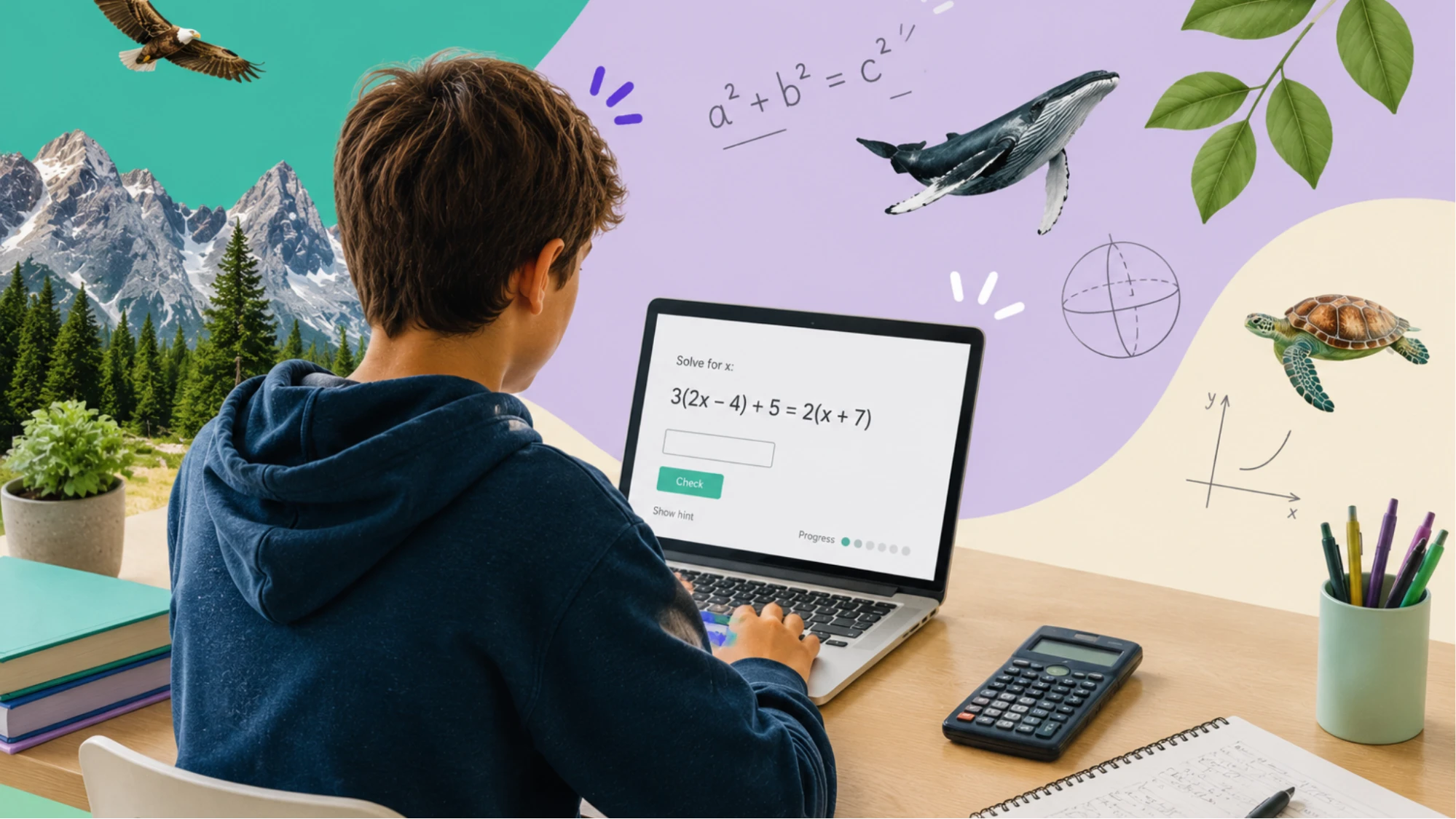
Alternative education includes homeschooling, online schools, Montessori, Waldorf, and forest schools. Whether you’re looking for more self-directed learning, more flexibility, or a more meaningful and well-rounded education, alternative programs deliver.
Traditional schools, whether they're public or private, often focus on assessments, grades, and learning material to meet state or national standards. While this works for some, it leaves others with a distorted view of who they are and what they’re capable of. If this feels all too real, read on to learn what an alternative education can offer.
Key takeaways
- Alternative education offers individualized learning for kids who need more than traditional schools.
- Online school, forest schools, worldschooling, and Waldorf are alternatives.
- bina is a global online alternative school that works well for traveling families.
What is alternative education?
An alternative education is anything outside of traditional school.
Some alternative schools are for children who had trouble learning in a traditional public school environment. For example, at-risk students or kids with special needs might enroll in an online public school or specialized private school that offers individualized learning.
But that’s not the only type of alternative education. Alternative education programs grow knowledge differently. They usually focus more on helping kids develop social-emotional skills and stimulating their critical thinking ability than traditional schools do. A study published in Child and Youth Services Review found that alternative schools are associated with higher creative potential and greater intrinsic motivation.
A common thread that runs through most alternative schooling programs is a focus on individualized instruction and creating an environment in which all kinds of children can thrive. Most allow kiddos to grow at their own pace, giving them time to wrestle with concepts that are tricky and breeze through easier sections quickly. Removing pressure from learning lets curiosity lead the way.
How do you know if an alternative school might work better for your child?
If your kiddo is struggling or bored at school, an alternative educational program might be a better fit.
Ask yourself: could your child benefit from more personalized instruction? Would a program that uses experiential learning, project-based learning, or other more hands-on approaches make school more meaningful? Would more social-emotional learning and life skills help them build their confidence?
School should be a place that supports your child’s growth. If it’s not, you might see some of the following signs:
- Losing interest in learning. A little information sponge that suddenly hates school is a red flag. This could be a sign that the traditional classroom setting is overwhelming or not engaging enough.
- Mornings become a fight to stay home. Have mornings become a warzone? You may find yourself working extra hard every morning to get your child ready for school, mopping up tears or reassuring a previously confident kiddo.
- A child who works hard but doesn’t achieve. A child who puts in the effort but doesn’t see results might find their groove in a non-traditional classroom setup.
- Expressions of frustrated creativity. Creative, curious, or gifted learners can feel suffocated by regular school schedules, tests, and limited subjects.
The right alternative can let your kiddo really shine, but how do you know what type of non-traditional education is best for your family?
Types of alternative education programs
Did you know that by the time a kiddo leaves school at 18, they will have sat through about 15,000 hours of school? That’s a lot of time to be in an environment that doesn’t bring out the best in them. So, if traditional school doesn’t seem to be working, what options do you have?
Homeschooling
Parents or guardians take responsibility for their child’s education themselves when they homeschool. Some homeschoolers use a recognized curriculum, while others allow their kiddo’s interests to guide the lessons.
Parents or guardians provide the educational resources, while the child works at a pace they’re comfortable with. The focus is on individual growth through independent study without constantly being compared to their classmates.
Montessori
Montessori programs are alternative schools that are big on self-directed learning. Students choose their activities within a prepared setup. The teachers provide resources and materials that are used to make abstract concepts like math or language into activities that children can work on using their hands.
Classes are made up of mixed age groups, typically covering a three-year gap. Younger kiddos learn from the older ones, while the older group practices what they’ve learned by teaching.
Waldorf schools
Waldorf is a creative approach to learning based on imagination, creative expression, and connection with the natural world. Each day has a gentle structure that flows between academics, movement, and quiet time. Teachers use storytelling, music, drama, and crafts as an instructional medium for academics, often making use of natural toys such as wooden blocks or silk cloths.
Online schools
Online or virtual schools let kids learn from home or while on the road. It’s a great alternative for families who travel frequently. For example, kids who are committed to sports, music, or other extracurricular activities that require multiple trips during the school year often learn online. That way, they can keep up with their education without missing the things they’re passionate about, whether it’s dance performances, piano, or ice skating competitions.
Project-based learning
Project-based learning begins with a problem that exists in the world and asks, “How can we solve this?” Teachers are available as facilitators, while the students take the lead and complete independent study. Kiddos research, work together, and problem-solve to come up with a presentation or product that could help solve the issue.
A lot of kids enjoy a project-focused approach because it lets them come up with their own ideas. Often, they learn without even realizing it because both subjects and skills are naturally woven into a single project, which is why we use project-based learning regularly at bina.
Unschooling or free learning
Unschooling is an alternative learning approach for kiddos who are clearly self-directed and vocalize what they value. If your kiddo brings a pile of questions and ideas to the breakfast table every morning ( “Why is the sky blue?” “Did you know that trees talk to each other?” “Can I make pancakes tomorrow but with ice cream?”), then unschooling gives them the fuel to keep feeding that innate sense of wonder about the world around them.
It’s essentially a child-led version of homeschooling that relies on their interests to guide the learning journey. Being able to choose what, when, and how to learn often removes conflicts around schoolwork. Unschooled kiddos learn practical skills that serve them well in life, such as building, cooking, gardening, or entrepreneurship.
Forest school
Does your child beg for more time when you ask them to come inside? Would their perfect classroom be the backyard, or, better yet, a wooded forest with plenty of space to scavenge for acorns and climb trees?
Forest school is a form of outdoor education that involves regular sessions in a natural environment, usually at least two hours a day. It combines intellectual development with physical, emotional, and social growth.
While not a full-day option for older kids, forest school can be a great introduction to learning for younger kids. It’s generally offered as a preschool or kindergarten program. Some forest schools also have summer camps and short-term programs for older kids, which can pair well with other types of alternative education, such as an online school.
Worldschooling
The world becomes the classroom as families combine travel with hands-on learning in a worldschooling approach. Kiddos learn through being immersed in different cultures, exploring history through visiting historical sites, or applying concepts such as math to real-life applications like currency exchanges and budgeting.
Some families worldschool for the summer and enroll their kiddo in a full-time school during the regular school year. Others have their kiddos learn in a global online school like bina, which offers live instruction in three time zones. Kids benefit from the structure of an accredited education, and families have the flexibility to travel the world at the same time.
How to choose the right type of alternative education
The right alternative education depends on your child’s needs, preferred learning styles, and your family circumstances. Here are some questions to guide your decision process.
- Does your child prefer hands-on or kinesthetic learning? Choose Montessori, forest school programs, or alternative schools that use project-based learning.
- Would your child benefit from a calmer learning environment and small class sizes? Consider a Waldorf school or an online school with tiny classes.
- Do you have the time and resources (and desire) to manage day-to-day learning? Consider homeschooling or unschooling.
- Does your family travel frequently by choice or for activities? Consider a global online school or worldschooling.
Still not sure what type of school is best? Take bina’s schooling-choice quiz to receive personalized recommendations.
School, but different: bina’s approach to education
bina makes learning an adventure. How do we do that? By connecting learning to the real world, tying projects to the UN’s sustainability goals, and diving into biomes like the ocean, desert, and tundra to explore science, mathematics, art, history, reading, and more.
We offer an internationally accredited education and teach real-world skills like finance and AI, so our students gain the skills, knowledge, and educational experience they need to do anything in life, whether they want to save the ocean, run a bakery, or become a teacher themselves! Our mandate is to produce confident, critical thinkers who stay curious and compassionate for the rest of their lives.
What makes bina stand out? We use precision education to ensure kiddos are being challenged enough to grow, but never feel overwhelmed, lost, or bored. Precision education involves teachers tracking and analyzing student data to discover what each child needs most and tailoring their educational experiences to suit them. Kiddos are divided into micro-learning groups based on their skill level and unique needs.
We also make social-emotional learning a core part of the daily routine.
bina’s social-emotional focus helps kiddos develop an awareness of their emotions and learn how to regulate them. They’re introduced to social awareness that allows them to empathize with others. The global nature of the school broadens their understanding of other cultures and backgrounds. Healthy communication skills are taught naturally throughout the lessons. They practice using words clearly, listening well, and resolving conflict in peaceful ways.
Is an alternative education right for your kiddo?
If public school is too overwhelming — or too boring — it’s worth exploring alternative education options.
Whatever your reasons, looking beyond traditional school can open up doors to a better education, increased motivation, and teachers who take the time to understand what your child needs to thrive.
At bina, we use a science-backed, precision education model that combines learning insights and educators’ understanding of what kiddos need in the moment to shape education.
bina combines the flexibility of learning at home, on the road, or really anywhere, with the structure and consistency of a globally accredited program. Connect with us to see if we’re a good fit.
Frequently asked questions
What type of kids go to alternative schools?
Alternative schools aren’t for a specific type of learner. They’re for all kids. Anyone looking for a non-traditional education might choose an alternative school.
In the U.S., there are public alternative schools for at-risk youth, but that’s just one type of alternative education. Online schools for traveling families, athletes, or children involved in performing arts, and schools that offer individualized learning for gifted, twice-exceptional, and neurodivergent learners all offer a form of alternative education.
Is Montessori considered an alternative education method?
Montessori is considered alternative education. It’s a non-traditional approach where most activities are self-led. For example, in a Montessori classroom, children spend part of the day choosing hands-on activities to work on independently.
How do alternative online schools work?
Alternative online schools usually combine live classes with asynchronous work that kids do alone.
bina uses a fully live model, so kids aren’t left to figure out what to do with their school day. They’re in classes for five hours a day (with a one-hour break for lunch). The entire school day is led by a teacher and a co-teacher, and kids are learning, creating, and having fun with their classmates, so they have time to build friendships.
Accredited, full-time school for grades K-12
Bring the best of the classroom to your home
See if we're a fit
More to read

Learning styles for kids: A practical guide for parents
Understand how your child likes to learn to keep them engaged with school. Help them become more adaptable by combining learning styles for kids.


6 project-based learning math ideas for elementary-aged kids
Math can feel abstract when it’s all rules and worksheets, which don’t always help kids connect what they’re learning to the world around them. And…



What is an education savings account? A complete guide
Learn what an education savings account is, how it works, what you can use it for, and how to open one.