Structured learning for kids: The ultimate guide to your options
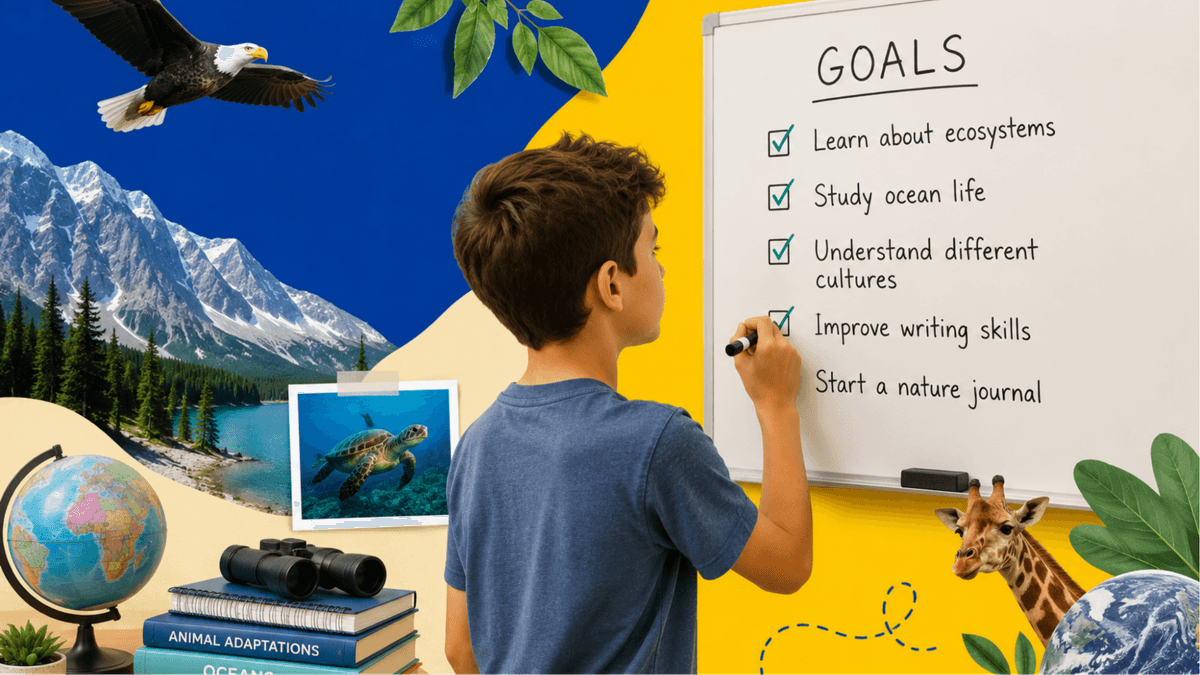

When your child's learning isn't clicking, it's hard to know what to do next.
Maybe they're coming home exhausted, pushing back against school, or losing confidence. Or perhaps they’ve started learning at home, and you're wondering whether you're giving them enough structure to keep making progress.
You want your kiddo to enjoy learning, build confidence, and make steady progress. Instead, you're left wondering whether they need more support, more flexibility, or a different approach altogether.
It can feel as though you're choosing between two extremes. One option feels too rigid. The other feels like you're responsible for holding everything together.
But learning doesn't have to be all or nothing. Structured learning is about finding the right amount of guidance for your child — enough structure to help them thrive, with enough flexibility to meet their individual needs.
Here's what structured learning really means, how it works, and how to decide whether it's the right fit for your family.
Key takeaways
- Structured learning gives kids the stability and predictability of a pre-designed learning plan.
- Research shows that a structured learning experience can improve cognitive development and make learning more seamless by reducing processing overload.
- Most schools offer a structured learning environment, but fall short on balancing structure with unstructured learning.
- At bina, our teachers use both structured and play-based, unstructured learning. Kids stay engaged because they have the freedom to create and explore, yet they have enough structure to build cognitive skills and actually learn.
Structured learning meaning
Before exploring the different approaches, it helps to understand how a structured learning model works.
What is structured learning?
Structured learning follows a clear plan. Lessons are intentional. Children receive regular guidance and feedback. Learning materials are introduced at the right time, and each new concept builds on the last to support knowledge retention and steady progress.
At bina, we believe a good structured learning program gives children a clear path while recognizing that no two children learn in the exact same way. Teachers can still adapt lessons, answer questions, and respond to individual needs. Live teacher-led lessons, a rich curriculum, and themed learning through biomes give children the structure they need while feeding their curiosity. But we’re also attentive to what each kiddo requires to stay in that Goldilocks zone of learning: challenged enough to grow, supported enough to develop confidence.
Why structured learning matters for children’s development
The benefits of structured learning are backed by a growing body of research.
A 2024 study published in Scientific Reports found that children who experienced structured early learning showed stronger cognitive development from school entry through to mid-childhood, helping them retain knowledge and build on what they'd already learned.
The reason is surprisingly simple.
2025 research published in the Journal of Development Economics found that breaking learning into manageable steps and providing clear guidance reduces cognitive overload. With the right amount of structure, kids understand, remember, and apply new concepts more effectively. That's what helps learning stick.
Structured vs. unstructured learning: what’s the difference?
If you're trying to decide which learning approach is right for your child, it can feel like you have to choose between structure and freedom. In reality, children benefit from both. The key is understanding what each approach is designed to do.
What subjects is structured learning best for?
Structured learning helps children build knowledge step by step. It's most effective for subjects where each new skill depends on mastering concepts before moving on to the next idea, such as reading, math, and science. When learning builds in a logical sequence, children are less likely to develop gaps in understanding and more likely to remember what they've learned.
Play-based learning vs. structured learning
Unstructured learning, often known as play-based learning, is still highly valuable as it gives children the freedom to explore, experiment, and follow their curiosity. It works best when there isn't one correct answer, helping kids develop creativity, flexibility, and social and emotional skills like resilience. For example, 2024 research published in The Australian Educational Researcher found that providing unstructured time gives learners the opportunity to use their imaginations, problem-solve, and explore ideas with other kids.
Why balance matters
If you've been wondering whether structured or unstructured learning is "better," the research points to a different answer.
As a 2025 study in The Open Public Health Journal concluded, both approaches support different aspects of children's development.
- Structured learning helps kiddos build the knowledge, skills, and confidence they need to make steady academic progress.
- Unstructured learning gives them opportunities to explore, create, collaborate, and apply what they've learned in new ways.
Rather than sitting at opposite ends of a debate, they work best together.
What does good structured learning actually look like?
By now, it's probably clear that structured learning isn't about strict rules or children sitting quietly at a desk all day.
What matters is the kind of structure your child experiences every day. Here are structured learning examples that show what this approach to learning actually looks like.
Clear progression and guidance
Good structured learning builds knowledge in the right order. Each lesson builds on the last, with regular progress monitoring to make sure children are ready before moving on. Rather than guessing what's next, they always have a clear path forward.
For example, math concepts are introduced one at a time, while reading develops from phonics to fluency without leaving gaps behind. In science, kids learn foundational concepts and then test that knowledge with experiments and discussion.
Active teaching and interaction
In a strong structured learning program, teachers explain new ideas, introduce the right learning materials, check understanding, and give regular feedback to address any misconceptions before they become bigger obstacles.
That might mean a teacher correcting a misunderstanding with a math problem during a lesson or giving specific, personalized feedback that helps a child improve their writing.
Engagement without rigidity
Good structured learning doesn't mean every child learns in exactly the same way or at the same pace.
Teachers should adapt their explanations, ask questions in different ways, provide extra support when it's needed, and stretch children who are ready to move ahead. When lessons are interactive and engaging, with real-world examples and varied activities, learning comes to life.
So while the structure stays consistent, the delivery is flexible.
How do you know if your child needs a different learning setup?
Sometimes, there isn't one big moment that tells you something needs to change. More often, it's a collection of small signs that leave you wondering whether your child needs a different balance between structured and unstructured learning methods.
Signs a traditional school structure isn’t the right fit
Every child has difficult days. But if those patterns keep showing up, it’s time to dig a little deeper.
You might notice your child:
- Feels consistently disengaged or bored, even in subjects they used to enjoy.
- Comes home drained, frustrated, or anxious most days.
- Treats learning as something to get through rather than something to take part in.
- Falls behind or feels underchallenged.
- Says things like, "I don't get it," "It's too easy," or "What's the point?"
On their own, these signs don't necessarily point to one specific problem. When several of these appear together, it's worth asking whether your child's current learning environment is giving them what they need.
Signs your child needs more (or different) structure
For some kids, it’s not a lack of motivation that’s the blocker. It’s that they need clearer guidance with structured learning opportunities.
You might notice they:
- Struggle to stay focused without regular direction.
- Start tasks but don't know how to finish them.
- Become increasingly confused as small gaps in learning build over time.
- Rely on you to explain or re-teach new concepts.
- Make progress that feels inconsistent or difficult to measure.
These signs often suggest your kiddo understands parts of their learning but needs more structured learning activities to connect everything. Clear expectations, step-by-step teaching, and regular feedback can help them become more confident and independent.
How to choose the right structured learning approach for your child: A simple decision framework
Every child learns differently, and every family has different priorities. The best learning environment is the one that gives your child the support they need while fitting realistically into your family's day-to-day life.
As you explore different learning options, ask yourself:
- Does my child need more guidance or more independence?
- Do I want to be responsible for teaching day-to-day?
- How important are consistency and routine in our week?
- How important are flexibility and variety?
- Is my child thriving with the support systems they have now?
You don't need every answer before making a decision. These questions help you figure out what's missing today, so you can look for a learning environment that's a better fit tomorrow.
How bina delivers structured learning you don’t have to DIY
bina gives children the consistency of a structured school day while giving families the flexibility that traditional schools can't always offer.
The structure of school, with the flexibility of learning from home
At bina, children learn from home, but the teaching is planned, delivered, and guided by experienced educators.
Students follow a full-time school day with live lessons and clear learning outcomes. Our daily structure is designed to help kids build knowledge step by step. You stay involved through regular updates, progress tracking, and teacher communication without carrying the responsibility of planning lessons or teaching every day.
Small classes make room for more attention
Every bina class is intentionally small and supported by both a teacher and a co-teacher, who encourage peer interactions and collaboration. That means children can ask questions, join discussions, receive regular feedback, and get extra help before small misunderstandings become bigger learning gaps.
Structure that still feels engaging
A structured learning experience should never feel repetitive or restrictive.
bina combines consistent routines with interactive learning activities, like collaborative projects tied to UN Sustainable Development Goals, fun conversations, and games with classmates.
Biome-themed units help connect learning across subjects, while the flexibility of learning from home gives families consistency through travel, life changes, and different time zones.
If you've been looking for something between traditional school and teaching everything yourself, that's the gap bina is designed to fill.
Structuring learning for your kiddo
Some children thrive with clear guidance and consistency. Others lose confidence when the structure isn’t right for them.
Yet when the setup fits, learning feels easier. Progress becomes visible. Confidence builds.
If your child seems frustrated, disengaged, or unmotivated, it’s often not the subject. It’s the structure around how they’re learning.
No child should feel lost in a system that doesn’t fit. And no parent should feel responsible for holding everything together at home. You don't have to choose between doing all the teaching yourself and sticking with a learning environment that isn't working. Structured home learning offers another option.
Want to see what a bina school day actually looks like? Start your bina journey today.
Accredited, full-time school for grades K-12
Bring the best of the classroom to your home
See if we're a fit

More to read

My child hates school: What it means, and what to do next
Learn why your child hates school and how to overcome school distress, including practical steps and alternative learning options that actually work.


Homeschool burnout: What to do when it feels like too much
Learn how to spot homeschool burnout, understand why it happens, and find practical ways to reduce stress and make learning at home more sustainable.


Learning styles for kids: A practical guide for parents
Understand how your child likes to learn to keep them engaged with school. Help them become more adaptable by combining learning styles for kids.